Root cause analysis and intervention strategies for the early-departure crisis.
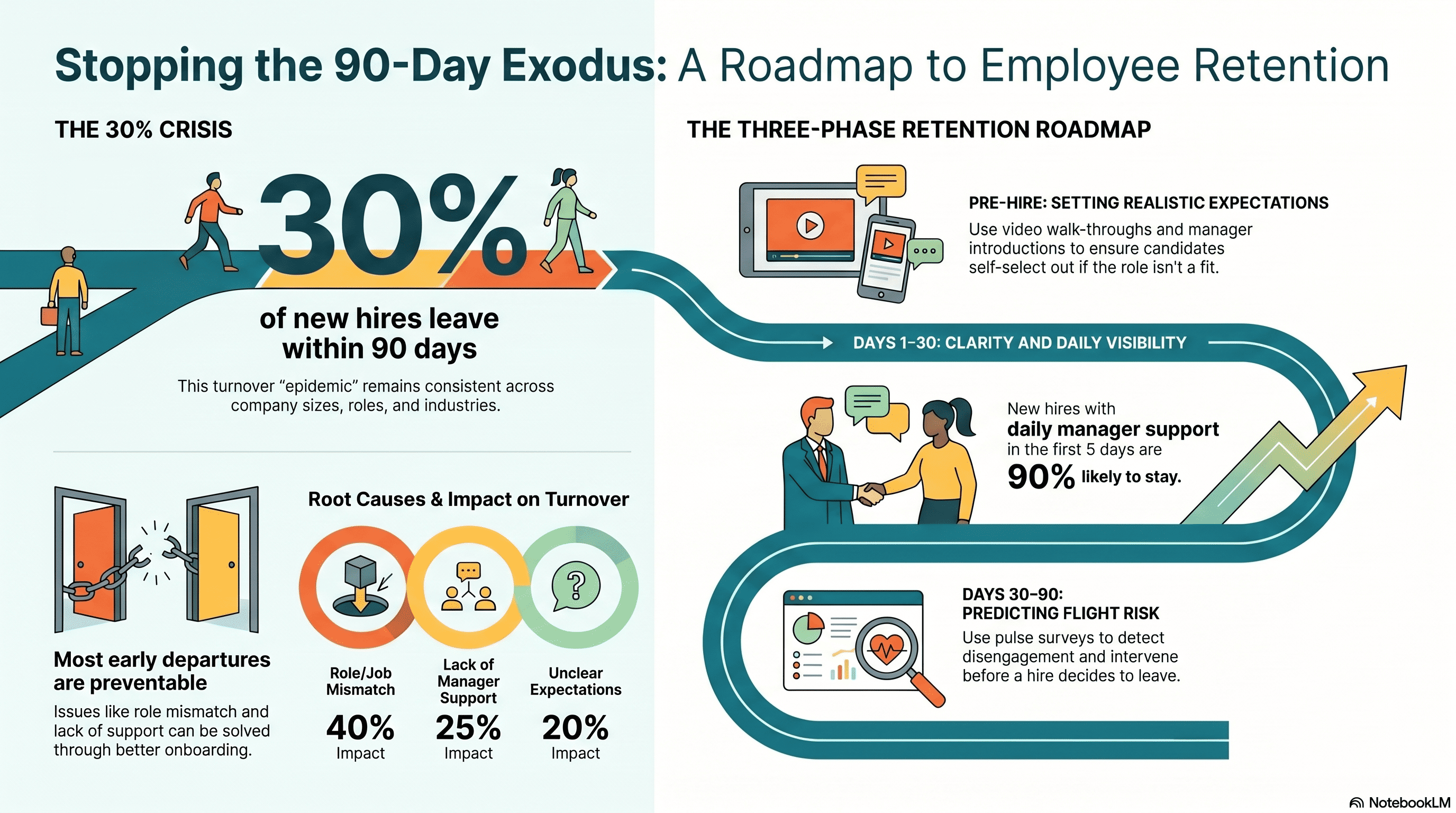
The 30% Crisis
Data from multiple sources (Gallup, SHRM, Brandon Hall) show that approximately 30% of new employees leave within 90 days. This is consistent across industries, company sizes, and roles. It's an epidemic.
Root causes:
- 40% cite role/job mismatch ("This isn't what I expected")
- 25% cite lack of manager support ("I felt abandoned")
- 20% cite unclear expectations ("I didn't know what success looked like")
- 10% cite team/culture fit ("I didn't feel part of the group")
- 5% other (compensation, location, schedule)
The good news: most of these causes are preventable with better onboarding.
Pre-Hire Intervention: Setting Right Expectations
Prevent mismatches before day one:
- Job preview: Video walk-through of actual role (not marketing fluff). Show reality.
- Manager introduction: Hire has a conversation with manager before day one. "Here's what the role actually involves. Here's my expectations. Do you have questions?"
- Realistic job descriptions: Describe the actual day-to-day, not the ideal vision.
- Team preview: Hire meets a few team members before day one.
Result: Hires self-select out if the role isn't right. Those who arrive are pre-sold on what to expect.
Day-One Through Day-30 Intervention: Clarity and Support
First 30 days are critical. Daily manager check-ins (even 5-minute huddles) communicate: "You matter. I'm here to support you."
Structure:
- Day 1: Clear expectations, team introductions, first task
- Days 2-5: Focused training, feedback, daily manager visibility
- Days 6-15: Increasing autonomy, manager check-ins (move from daily to few-times weekly)
- Days 16-30: More independent work, day-30 formal check-in (how's it going? any blockers?)
Hires who have daily manager visibility and support in the first 5 days are 90% likely to stay past 90 days.
Day-30 Through Day-90 Intervention: Engagement and Belonging
Mid-tenure focus shifts to engagement and belonging. Pulse surveys at days 30, 60, 90 flag engagement dips. When a survey shows a hire is disengaged ("I don't feel part of the team"), manager intervenes: buddy reassignment, team activity inclusion, or cross-training for skill building.
Managers who proactively address engagement dips prevent 70% of day-60-to-90 departures.
Predicting Flight Risk
Use data to predict who will leave:
- Low pulse survey scores (especially "feel part of team" and "manager supports me")
- Increased absences or tardiness
- Declining engagement
- Peer comments (buddy feedback showing disengagement)
When flight risk is identified, manager has a conversation: "I want to make sure you're set up for success. How are things really going?" Listen, support, problem-solve.
How Cadient Talent SmartSuite Helps
SmartSuite flags flight-risk hires automatically based on pulse survey responses and engagement trends. Managers receive alerts: "Sarah's responses suggest she's not feeling supported. Consider reaching out." Intervention playbooks guide managers on how to respond.
References and Further Reading
- Gallup, 'The 90-Day Exodus' (2023)
- SHRM, 'Early Turnover Trends' (2024)
- Brandon Hall Group, 'Why New Hires Leave' (2023)
How Cadient Talent SmartSuite™ Helps
Cadient Talent’s SmartSuite™ platform automates compliance workflows, embeds regulatory guardrails directly into your hiring process, and maintains audit-ready documentation at every stage—so your team can focus on finding great talent while staying protected from costly violations.
Ready to transform your hiring?
See how Cadient Talent helps you find the right people, faster.
Learn More
